The shaving brand that stopped watching recordings.
Smooth Sunday had behavioral data long before they had answers. The sessions were recorded and the heatmaps were drawn. What was missing was anyone with a spare hour to sit and watch them.
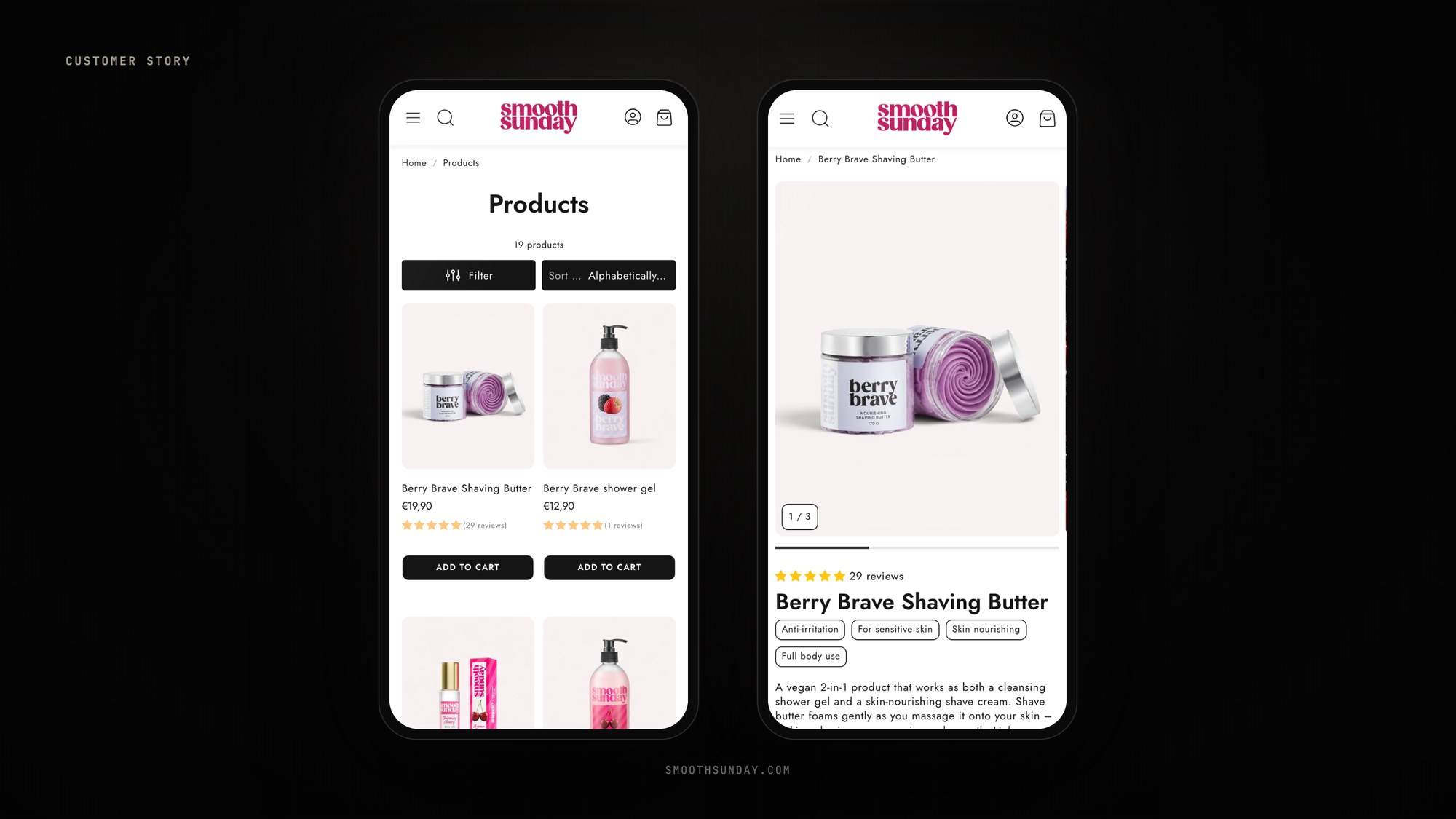
Live Smooth Sunday pages. Every element on them reports clicks, scroll depth, and dead clicks back with its product context attached.
Before: Smooth Sunday ran Microsoft Clarity. Every question about shopper behavior meant opening the tool, filtering, and watching sessions until a pattern showed up.
Now: the same question goes to Claude, which reads their behavioral data directly through MCP and answers in plain language, grounded in their own sessions.
What changed: not the data. The cost of asking.
A small Nordic team whose storefront never sits still
Smooth Sunday makes gentle shaving and skincare, and they run a new campaign every month. The storefront is never static: new landing pages, new markets every few weeks.
That cadence is what makes shopper behavior worth reading, and what leaves nobody free to read it.
The data was never the problem
Smooth Sunday ran Microsoft Clarity, and it worked. Sessions were recorded, heatmaps were generated, the numbers were real. Clarity is a good free tool and nothing here is a complaint about it.
The problem was what it cost to use. Every question about shopper behavior turned into a small research project: open the tool, remember which filter you left on, narrow to the right device and page, then watch recordings until something repeats. At the end you have a heatmap that shows where people clicked but not whether the click did anything. A hot spot looks identical whether visitors are engaging with an offer or hammering a button that is quietly broken.
Clarity ships an MCP server, so the obvious move was to point an AI at it. That runs into a wall quickly. It returns session metadata, device, browser, country, duration, and it is capped at ten requests a day with a three-day lookback. Enough to describe who visited. Not enough to work out what to fix. We wrote up the full limits in our Clarity MCP breakdown.
Same behavior, different unit of work
ClickContext captures the same behavioral signals Clarity does: clicks, scrolls, rage clicks, dead clicks, scroll depth. The difference is what gets attached to each one. Every event carries its commerce context, which product was on screen, what was in the cart, whether the session ended in an order, so the data can answer questions about money rather than only about movement.
That data is then exposed over a native MCP server. Claude reads the actual sessions rather than a summary of them, and Smooth Sunday asks in plain language instead of opening anything.
| Answering one question | Before | Now |
|---|---|---|
| Getting started | Open the tool, set the filters | Type the question |
| Finding the pattern | Watch sessions until one repeats | Claude reads every session |
| Knowing if a click worked | Not shown on a heatmap | Dead and rage clicks, per element |
| Sizing the problem | A hunch, in no particular unit | Sessions and revenue at stake |
| Time to an answer | Most of an afternoon | About a minute |
In their words
“I've tried the usual session recording and heatmap apps, but watching recordings one by one rarely tells you much. Click Context structures the data so you can see what's happening and ask AI for insights on top of it. That makes it far quicker to find where customers get stuck and why they don't buy.”
Lasse Helminen, Co-founder, Smooth Sunday
Behavioral data your AI can actually read.
ClickContext captures the signals Clarity and Hotjar do, then exposes them to Claude and ChatGPT through a native MCP server, with product, cart, and revenue context on every event. Free plan available, one-click Shopify install.